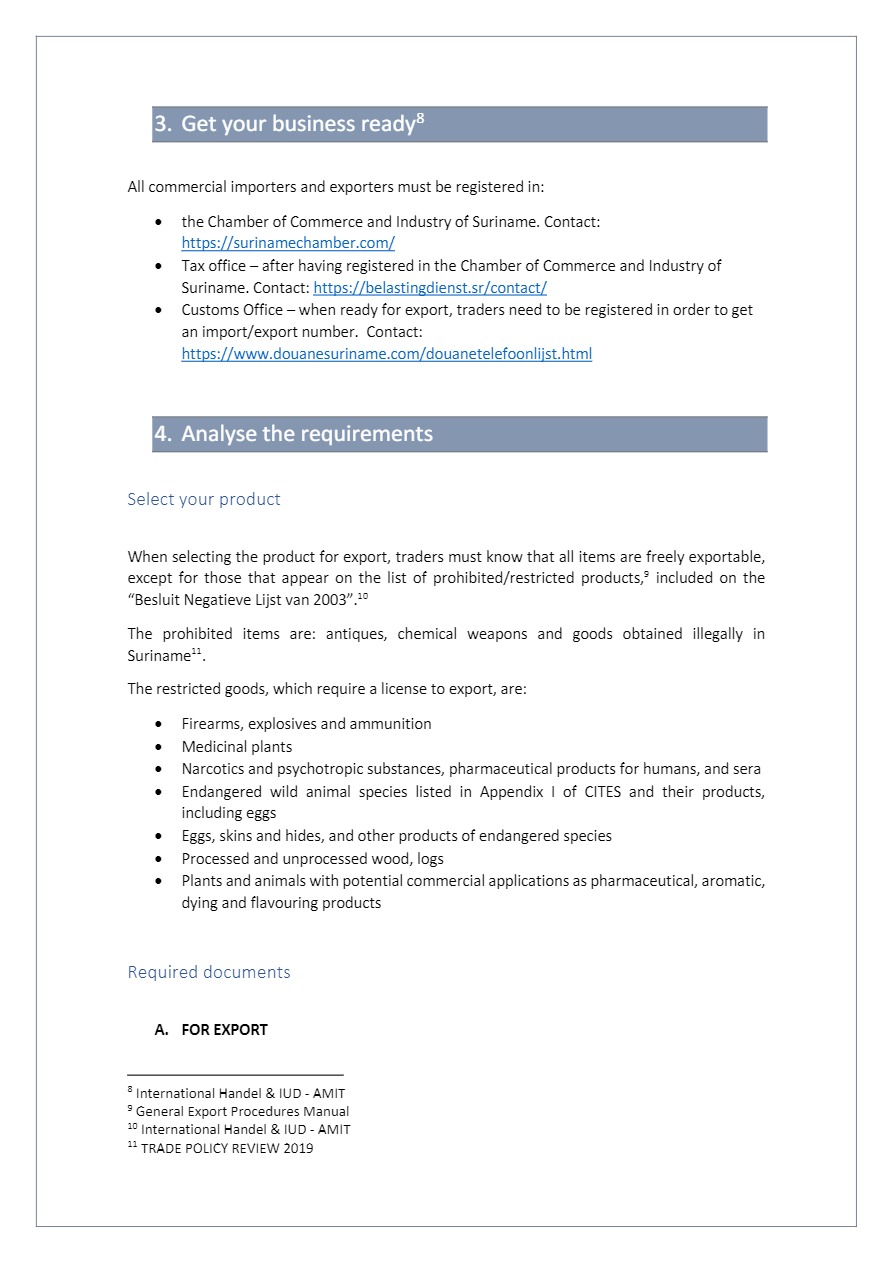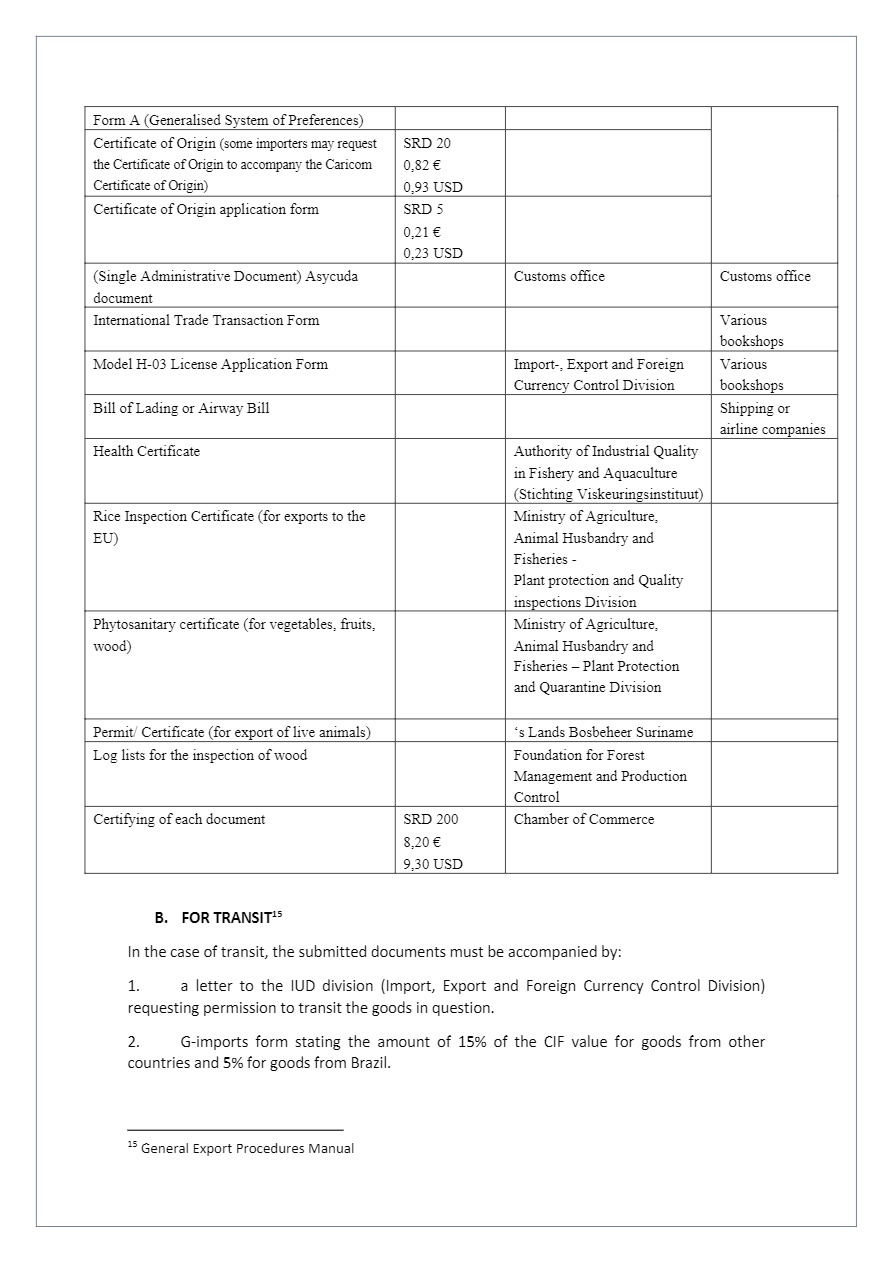







All commercial importers and exporters must be registered in:
 the Chamber of Commerce and Industry of Suriname. Tax office – after having registered in the Chamber of Commerce and Industry of Suriname. Customs Office – when ready for export, traders need to be registered in order to get an import/export number.
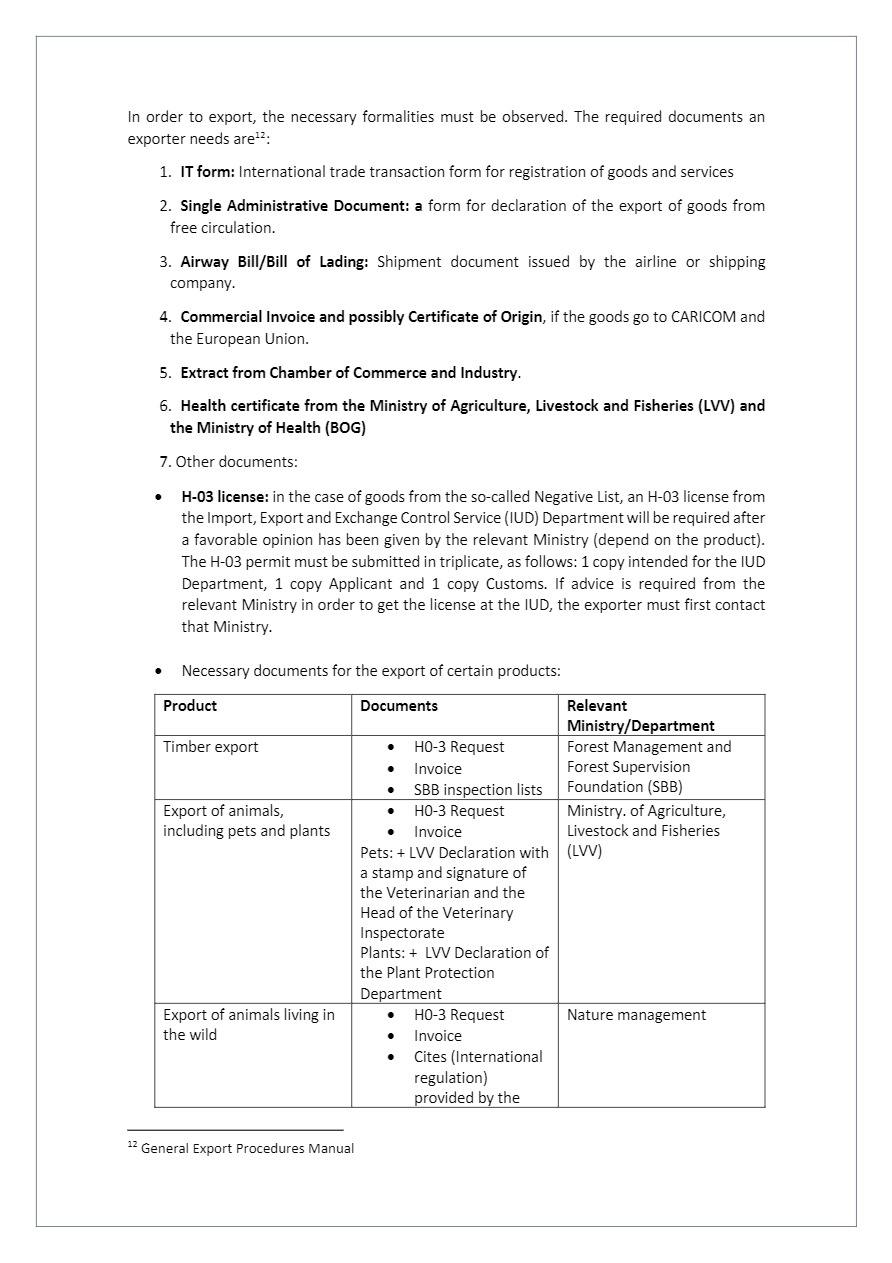
Select your product
When selecting the product for export, traders must know that all items are freely exportable, except for those that appear on the list of prohibited/restricted products, included on the “Besluit Negatieve Lijst van 2003”.
The prohibited items are: antiques, chemical weapons and goods obtained illegally in Suriname.
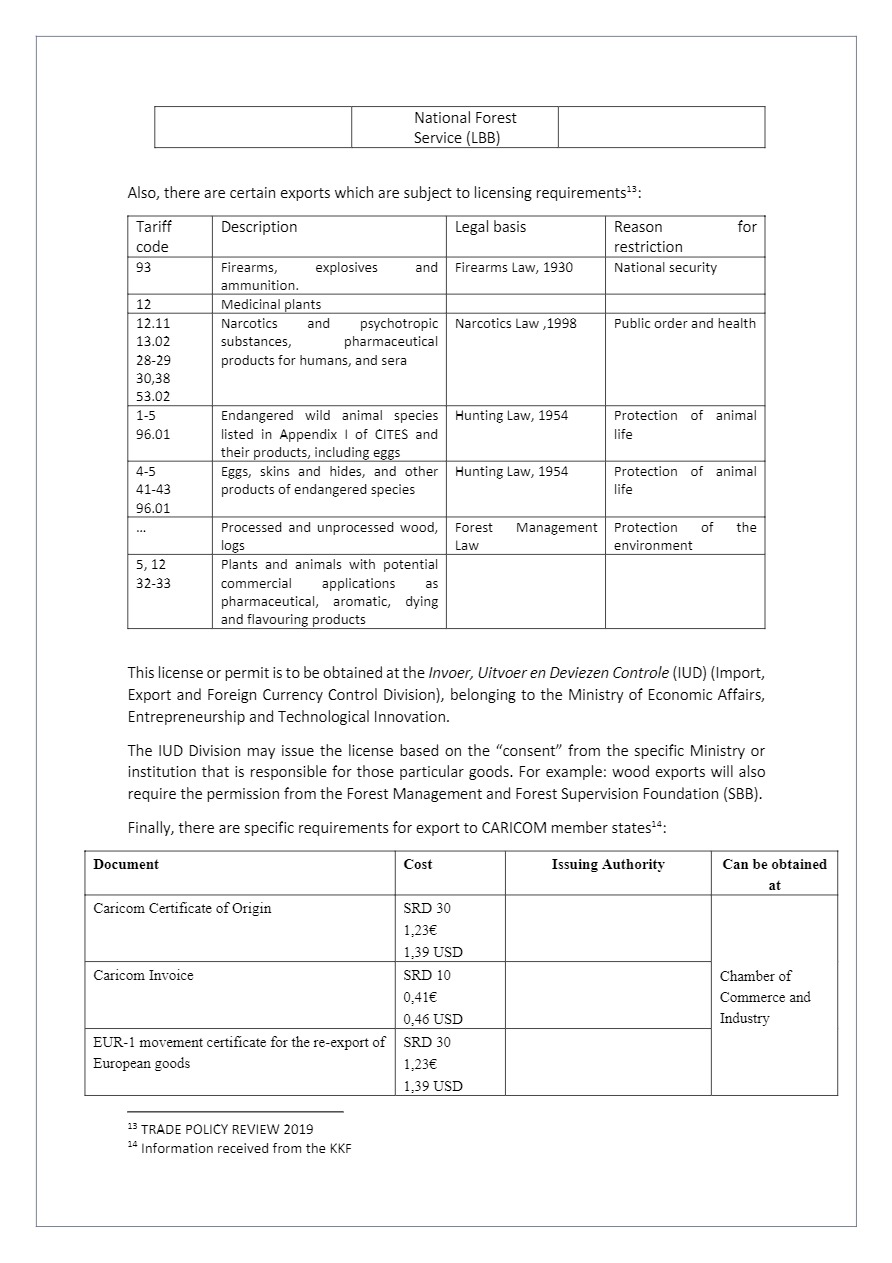
The restricted goods, which require a license to export, are:
Firearms, explosives and ammunition Medicinal plants Narcotics and psychotropic substances, pharmaceutical products for humans, and sera Endangered wild animal species listed in Appendix I of CITES and their products, including eggs Eggs, skins and hides, and other products of endangered species Processed and unprocessed wood, logs Plants and animals with potential commercial applications as pharmaceutical, aromatic, dying and flavoring products
Taxes, charges and levies
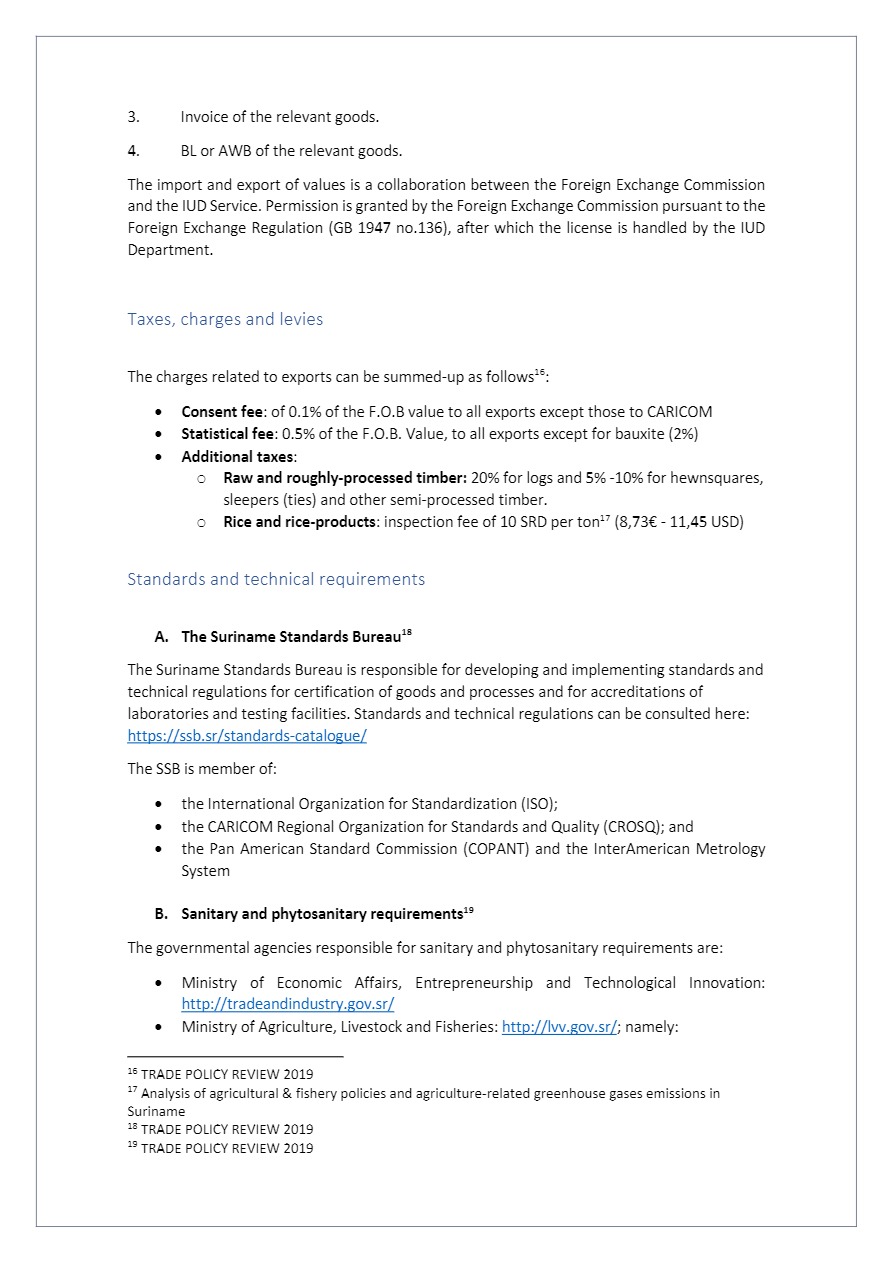
The charges related to exports can be summed-up as follows:
Consent fee: of 0,1% of the F.O.B value to all exports except those to CARICOM Statistical fee: 0,5% of the F.O.B. Value, to all exports except for bauxite (2%) Additional taxes:In order to begin the export process, it is advisable to:
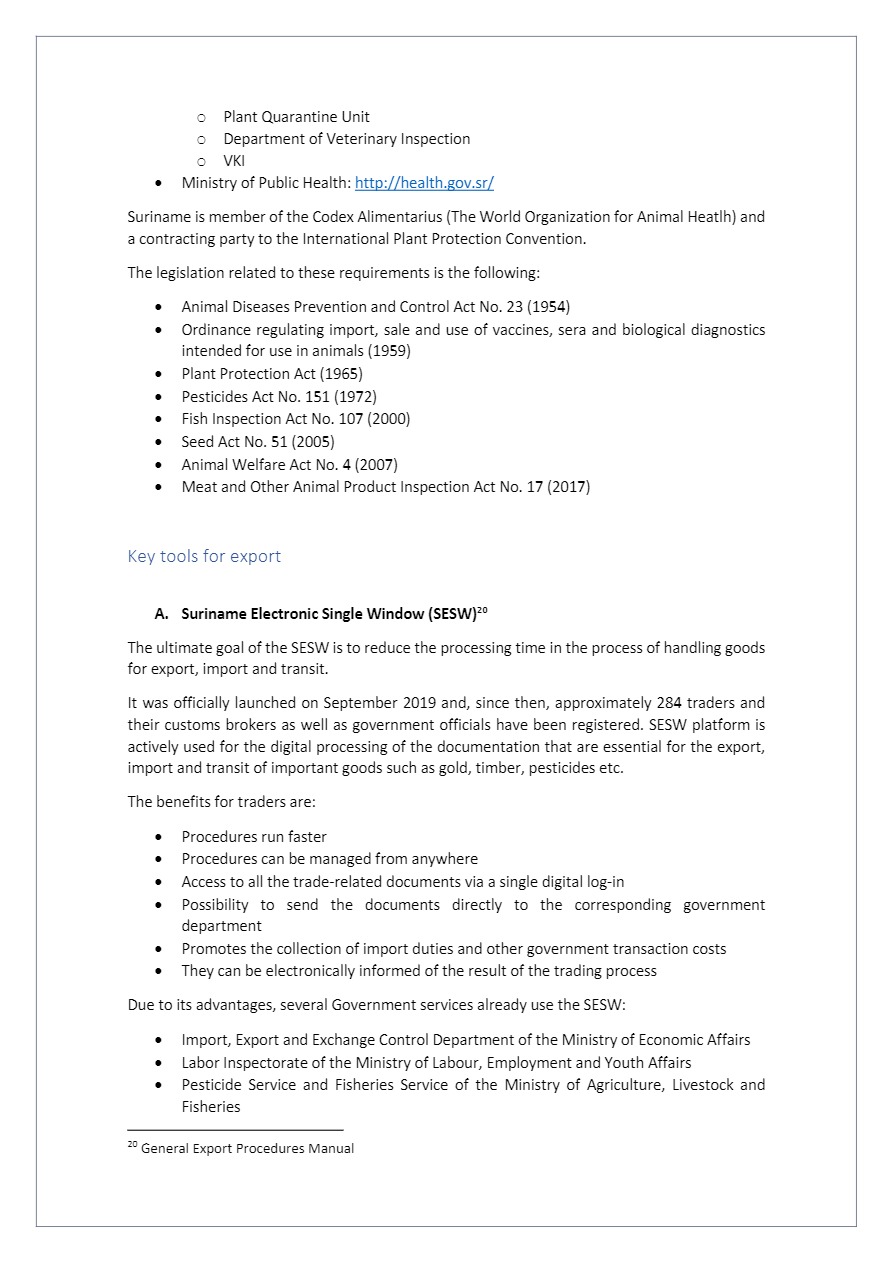
 Hire a custom broker to help you throughout the process (mandatory) Contact the key public entities involved in the export process and in charge of regulating the activity related to the goods you are planning to export. Key associations related to trade Financial entities to look for financial support
All this information can be consulted in detail in the flipbook HOW TO EXPORT.